Imitation in Baby Development: 7 Ways It Shapes Early Growth
Page Contents
Imitation in baby development is more than just cute mimicry — it’s how your little one learns to talk, think, and connect emotionally. From copying a smile to repeating your words, imitation is a baby’s first language of learning. This post explores why imitation is vital for cognitive and emotional growth, and how you can encourage it naturally at home.
What Is Imitation in Baby Development?
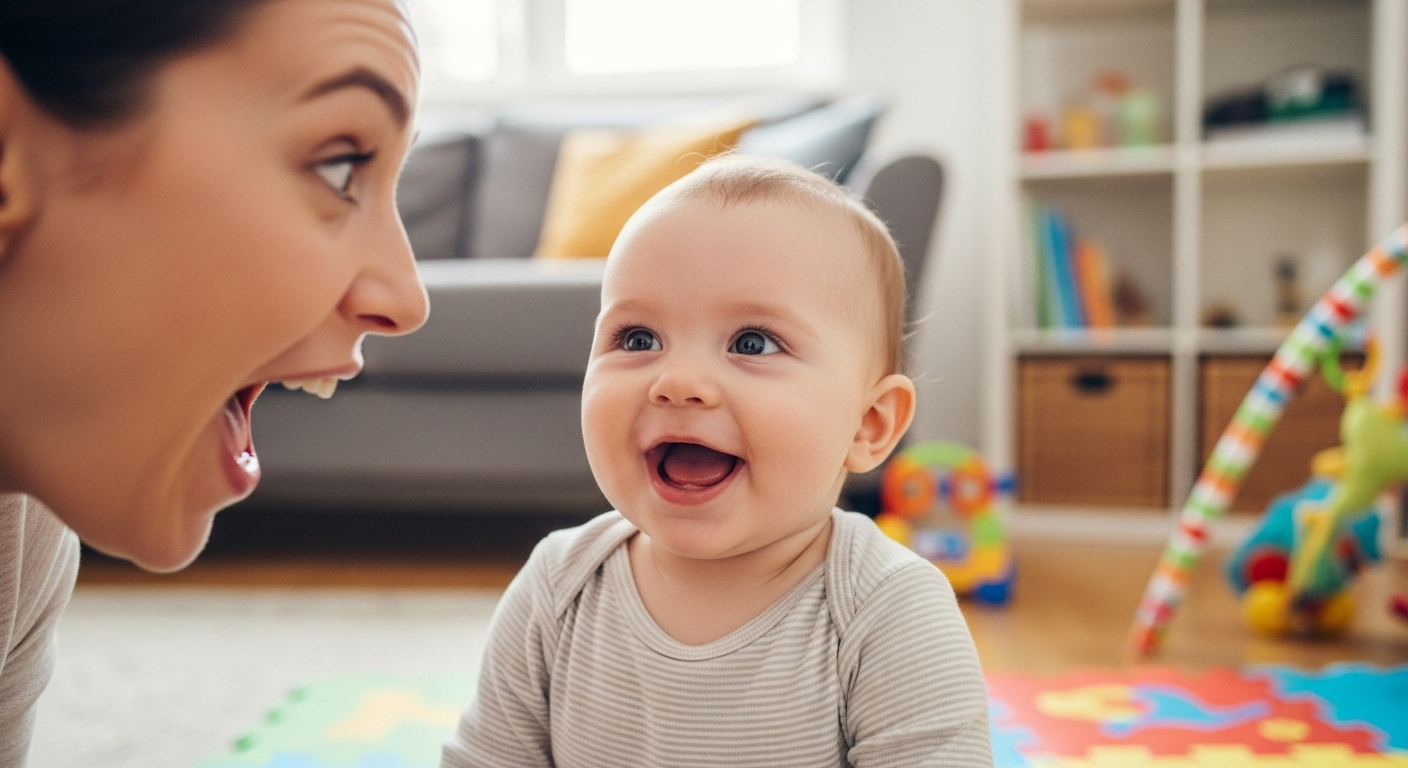
Imitation in baby development refers to how infants observe and copy the actions, sounds, and expressions of others. It’s an essential building block for learning because babies are wired to watch and mirror.
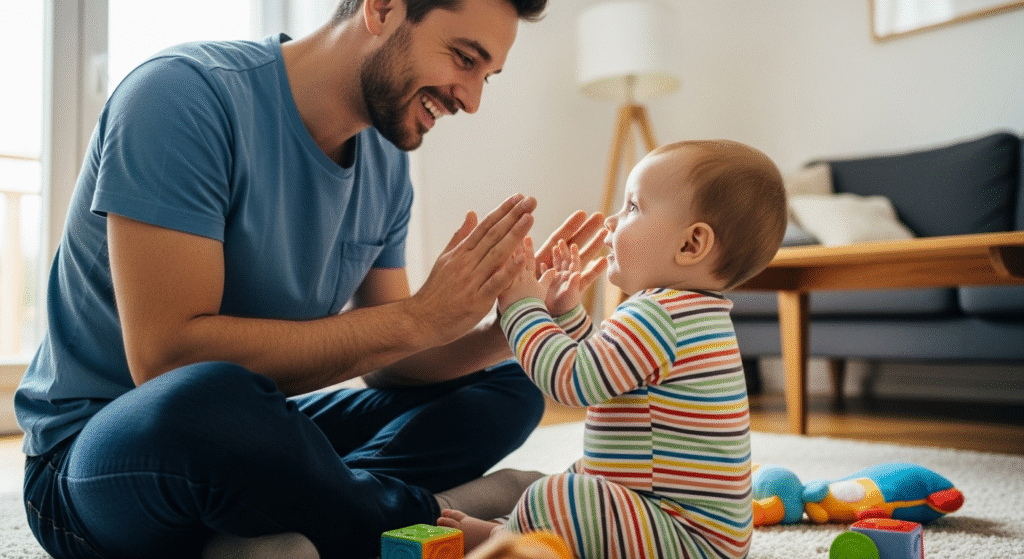
From as early as two months, babies begin imitating facial expressions like smiling or sticking out the tongue. By six months, they copy gestures, and by one year, they start mimicking sounds, clapping, and even simple daily actions.
This process builds early communication skills, emotional understanding, and social connection — all crucial for healthy development.
Why Imitation Is Crucial for Cognitive Growth
When babies imitate, their brains are practicing how to think. Through imitation, they learn:
- Cause and effect — “If I drop this toy, it makes a sound.”
- Memory building — They recall actions they’ve seen before.
- Language acquisition — Copying sounds helps form words.
- Problem-solving — Repeating what adults do teaches them logical steps.
A study published in the Journal of Child Psychology and Psychiatry found that imitation helps strengthen neural connections responsible for memory, reasoning, and language comprehension.
👉 Read more from the National Institutes of Health
How Imitation Supports Emotional and Social Development
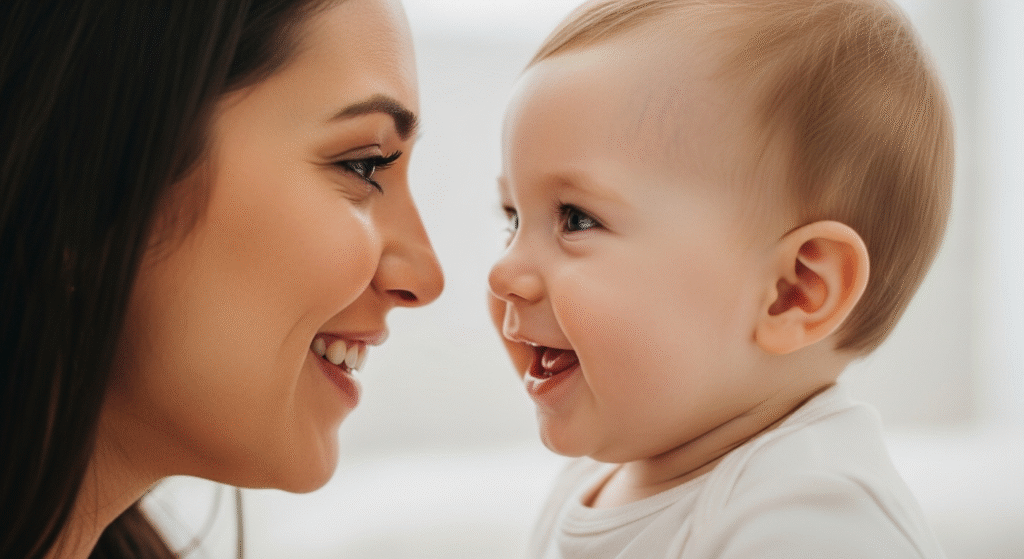
Imitation isn’t only intellectual — it’s deeply emotional. Babies mimic the people they love most, which strengthens bonding and empathy.
Here’s how imitation builds emotional intelligence:
- Mirror bonding: When you smile and your baby smiles back, that’s emotional communication in action.
- Understanding emotions: By copying expressions, babies learn what happiness, surprise, or sadness looks like.
- Building trust: Babies feel safe when their gestures and reactions are mirrored and acknowledged.
In Indian families, where joint family systems still thrive, babies benefit from multiple caregivers modeling emotions and social cues — a natural boost to imitation learning.
Encouraging Imitation in Your Baby: Practical Tips for Parents
You don’t need fancy toys — just your time, expressions, and voice. Here are seven easy, natural ways to encourage imitation in your baby:
- Face-to-face time: Get on your baby’s level and make eye contact.
- Talk often: Narrate what you’re doing; babies love copying sounds and tone.
- Use songs and rhymes: Repetitive melodies help babies copy rhythms and gestures.
- Play peek-a-boo: It teaches anticipation and response imitation.
- Model emotions: Express joy, surprise, and comfort — babies will mirror these feelings.
- Celebrate copying: When your baby imitates, respond with praise and excitement.
- Avoid overstimulation: Keep activities short and engaging to maintain focus.
💡 Tip: Imitation is the first step toward independence — babies who copy are actually preparing to do things on their own.
Imitation in Language and Communication Skills
Imitation lays the groundwork for speech. Babies first mimic sounds (“ba-ba,” “ma-ma”) and gestures (waving, clapping). Over time, this imitation becomes language — they learn meaning through repetition.
Encouraging simple back-and-forth talk like “Say bye-bye!” or “Can you clap like mama?” strengthens both speech clarity and emotional connection.
Imitation in Indian Parenting Culture
In India, cultural traditions like singing lullabies, family storytelling, and expressive gestures naturally promote imitation.
Babies who grow up surrounded by spoken and emotional richness — grandparents, cousins, siblings — tend to develop stronger social and verbal imitation skills early on.
So, simple acts like singing bhajans or clapping games (like pat-a-cake) aren’t just cultural habits — they’re brain-building tools.
Imitation in baby development is the silent teacher behind every milestone — from the first smile to the first word. By observing and copying, babies develop thinking skills, emotional intelligence, and communication abilities that last a lifetime.
Spend time engaging, playing, and responding — because every moment you model is a moment your baby learns.
Want more evidence-based parenting insights? Subscribe to our newsletter for weekly tips on nurturing your baby’s natural growth.
Also Read: Herbal Ingredients in Baby Shampoos: 7 Gentle Wonders for Your Baby’s Scalp
FAQs
1. What age do babies start imitating?
Most babies begin imitating facial expressions around 2–3 months, and actions like clapping or waving by 9–12 months.
2. Why is imitation important in baby development?
Imitation helps babies learn communication, problem-solving, and emotional skills — it’s the foundation of learning.
3. How can parents encourage imitation in daily life?
Through talking, singing, playful gestures, and modeling behavior with love and patience.
4. What if my baby doesn’t imitate yet?
Every baby develops at their own pace. Encourage interaction, maintain eye contact, and consult a pediatrician if milestones are significantly delayed.
5. Is imitation linked to language development?
Yes, imitation helps babies learn sounds, words, and the rhythm of speech, which directly supports early language development.