
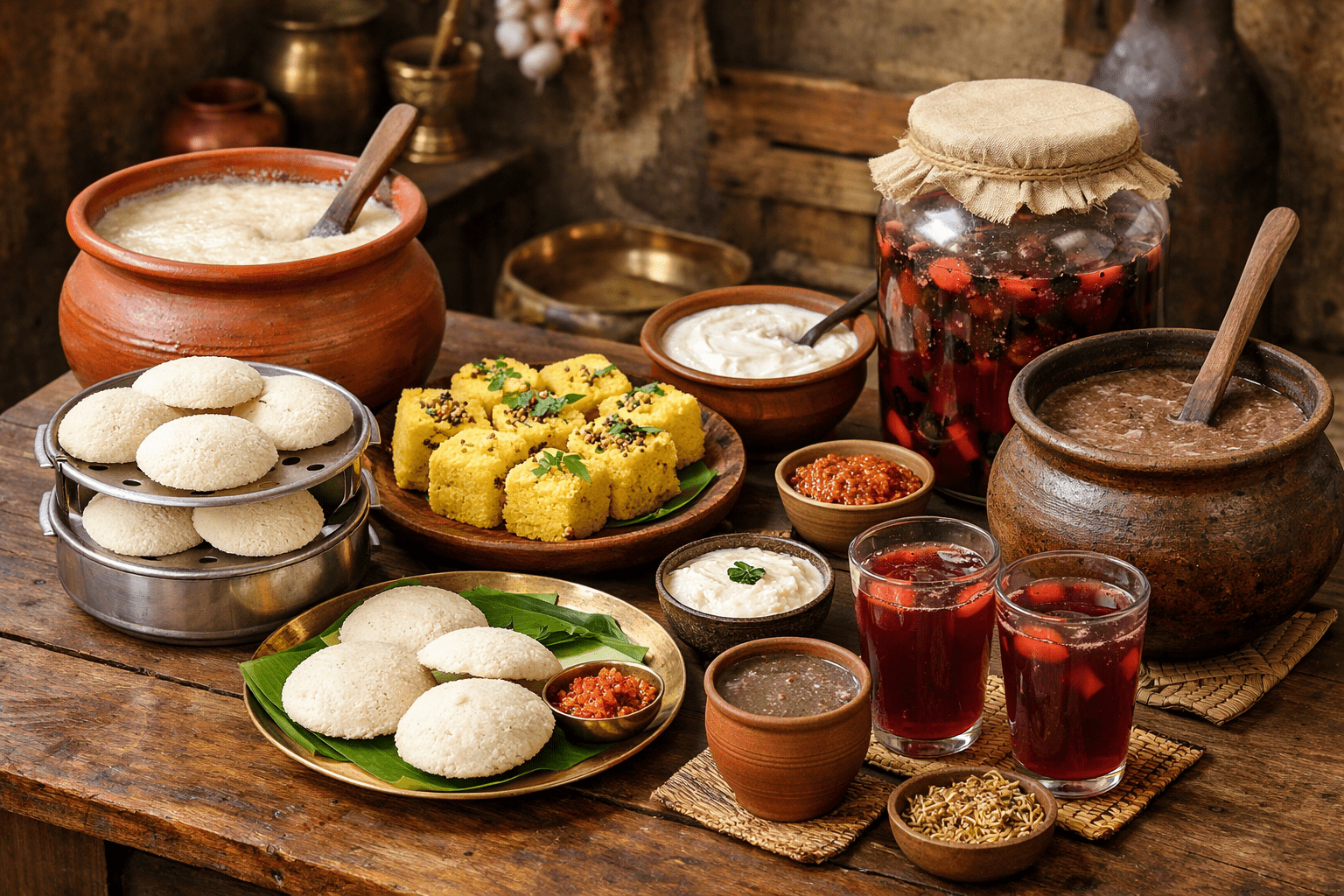
Homemade Fermented Foods in India have been a part of traditional Indian kitchens for centuries. Long before modern probiotics became popular, Indian households naturally consumed fermented dishes daily to improve digestion, enhance nutrition, and preserve food naturally.
Fermentation is a natural process where beneficial bacteria break down sugars and starches in food. This process not only improves flavor but also increases the availability of nutrients and promotes gut health.
In this article, we will explore the most popular Homemade Fermented Foods in India, their health benefits, and why they deserve a regular place in your diet.
What Are Homemade Fermented Foods in India?
Homemade Fermented Foods in India are foods prepared using natural fermentation techniques without artificial preservatives or additives. These foods rely on naturally occurring bacteria and yeast to transform ingredients over time.
Common characteristics of fermented foods include:
- Slightly sour taste
- Improved digestibility
- Higher probiotic content
- Enhanced nutrient absorption
Many traditional Indian recipes naturally include fermentation as an essential step in preparation.
According to the World Health Organization, fermented foods can support gut health by promoting beneficial bacteria.
https://www.who.int
Health Benefits of Homemade Fermented Foods in India
Adding Homemade Fermented Foods in India to your daily diet offers multiple health advantages.
1. Improves Gut Health
Fermented foods contain natural probiotics that support beneficial gut bacteria. A healthy gut microbiome improves digestion and immunity.
2. Enhances Nutrient Absorption
Fermentation breaks down complex nutrients, making vitamins and minerals easier for the body to absorb.
3. Supports Immunity
Since around 70% of the immune system is linked to gut health, fermented foods play a vital role in strengthening immunity.
4. Improves Digestion
Many fermented foods are easier to digest compared to their non-fermented versions.
5. Naturally Preserves Food
Traditional fermentation allows food to stay fresh longer without refrigeration.
More details about probiotic foods can be found at the Harvard School of Public Health.
https://www.hsph.harvard.edu
9 Popular Homemade Fermented Foods in India
Here are some of the most common Homemade Fermented Foods in India that are widely prepared across different regions.
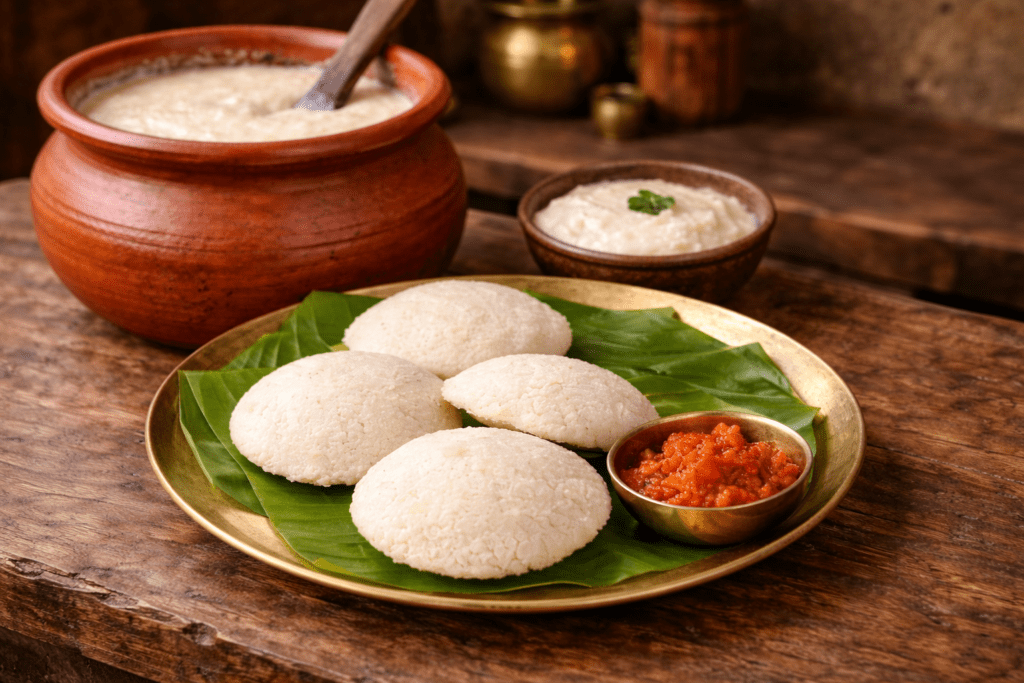
1. Idli
Idli is one of the most famous South Indian fermented foods.
It is made from fermented rice and urad dal batter and then steamed.
Benefits:
- Easy to digest
- Low in fat
- Rich in probiotics
2. Dosa
Dosa uses the same fermented batter as idli but is cooked as a thin crispy pancake.
Fermentation improves its flavor and nutritional value.
Popular variations include:
- Masala dosa
- Rava dosa
- Paper dosa
3. Dhokla
Dhokla is a popular Gujarati snack prepared from fermented gram flour or rice-lentil batter.
Fermentation gives dhokla its soft and fluffy texture.
Health benefits include:
- High protein
- Easy digestion
- Low oil content
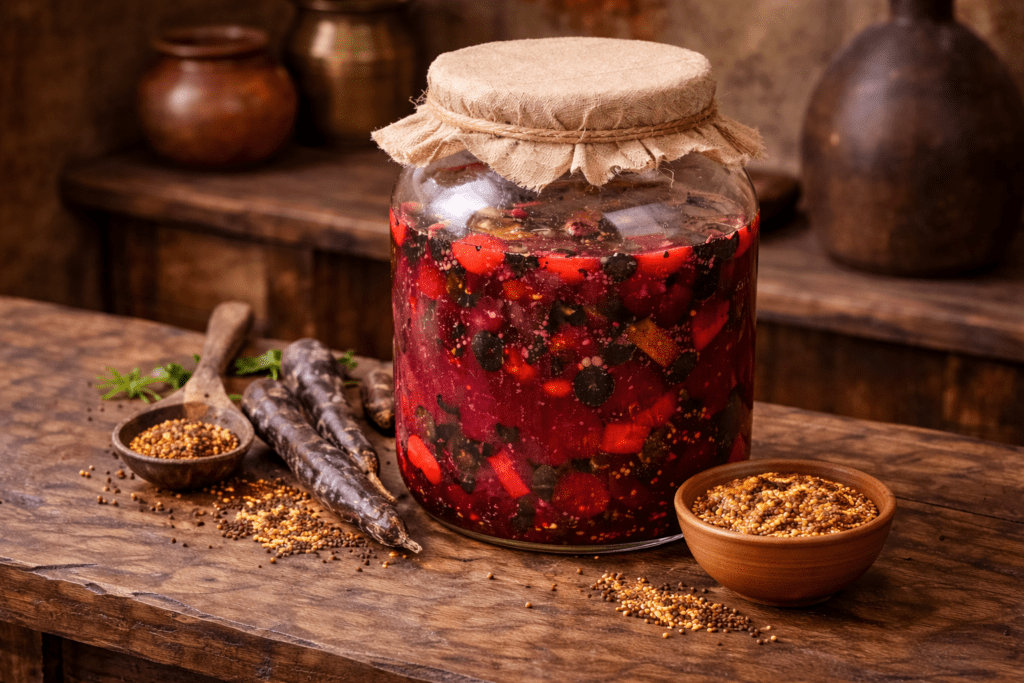
4. Kanji
Kanji is a traditional North Indian fermented drink made from black carrots, mustard seeds, and water.
This probiotic-rich drink is especially popular during winter.
Benefits:
- Detoxifies the body
- Improves gut health
- Rich in antioxidants
5. Homemade Curd (Dahi)
Curd is one of the most widely consumed Homemade Fermented Foods in India.
It is made by fermenting milk using beneficial bacteria.
Benefits include:
- Probiotic rich
- Supports digestion
- Improves calcium absorption
6. Appam
Appam is a fermented rice pancake popular in Kerala.
The batter often includes fermented rice and coconut milk.
This gives appam its soft center and crispy edges.
7. Jalebi Batter
The batter used to make jalebi is fermented before frying, giving the sweet its signature tangy taste.
Though it is a dessert, the fermentation process improves flavor complexity.
8. Gundruk
Gundruk is a traditional fermented leafy vegetable dish popular in Himalayan regions.
The leaves are naturally fermented and dried for preservation.
Benefits include:
- Rich in fiber
- Supports gut health
- Contains natural probiotics
9. Ambali (Ragi Ambali)
Ragi Ambali is a fermented porridge made from finger millet.
It is popular in Karnataka and Andhra Pradesh.
Health benefits include:
- High calcium content
- Improves digestion
- Provides sustained energy
Why Homemade Fermented Foods in India Are Better Than Store-Bought Options
Many commercial probiotic products contain added preservatives and artificial ingredients.
Homemade Fermented Foods in India offer several advantages:
- Completely natural fermentation
- No artificial additives
- Fresh and nutrient-rich
- Affordable and easy to prepare
- Preserves traditional food culture
Preparing fermented foods at home also allows better control over ingredients and hygiene.
Tips for Making Homemade Fermented Foods in India
If you want to start making Homemade Fermented Foods in India, follow these simple tips:
- Use clean utensils and containers
- Maintain warm temperatures for fermentation
- Avoid metal containers for long fermentation
- Use filtered or boiled water when required
- Allow enough fermentation time
Most Indian fermented foods ferment naturally within 8–24 hours depending on climate.
Homemade Fermented Foods in India are not just traditional recipes—they are powerful natural sources of probiotics that support digestion, immunity, and overall health.
From idli and dosa to kanji and ragi ambali, these foods have been nourishing Indian families for generations.
Including a variety of Homemade Fermented Foods in India in your daily meals can significantly improve gut health while preserving India’s rich culinary heritage.
Start adding these fermented foods to your diet today and enjoy their incredible health benefits.
Also Read: Preventive Lifestyle for Metabolic Health: 9 Powerful Habits for a Stronger and Disease-Free Life
FAQs
1. What are the most common Homemade Fermented Foods in India?
Some of the most popular Homemade Fermented Foods in India include idli, dosa, curd, dhokla, kanji, appam, ragi ambali, and gundruk.
2. Are Homemade Fermented Foods in India good for gut health?
Yes, Homemade Fermented Foods in India contain natural probiotics that support beneficial gut bacteria and improve digestion.
3. How long does it take to ferment foods at home?
Most Homemade Fermented Foods in India ferment within 8–24 hours depending on temperature and ingredients.
4. Can fermented foods improve immunity?
Yes. Since gut health is closely linked to immunity, regular consumption of Homemade Fermented Foods in India may help strengthen the immune system.
5. Are fermented foods safe to eat daily?
Yes, most Homemade Fermented Foods in India such as curd, idli, and dosa are safe and healthy to consume daily in moderate amounts.