
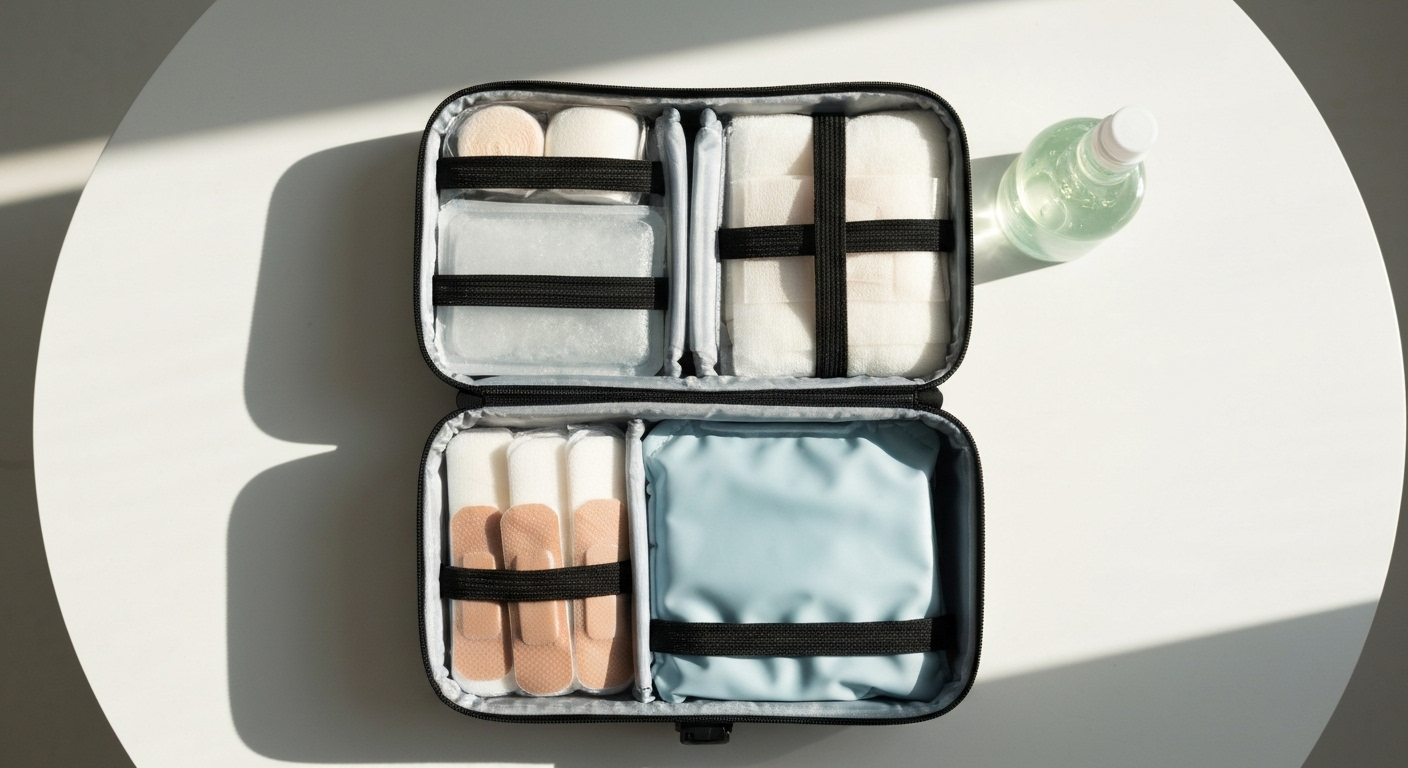
First Aid for Sprains and Strains: 7 Essential Steps to Heal Fast
Page Contents
First Aid for sprains and strains is often the difference between a quick recovery and weeks of pain. Whether you twist your ankle on a morning walk or strain your wrist at the gym, knowing what to do in those first few minutes matters. This guide will show you exactly how to use a first aid kit for sprains and strains—the smart, calm way that speeds up healing and prevents long-term damage.
1. Understanding Sprains and Strains
Before reaching for your first aid kit, it helps to know what’s happening beneath the skin.
- A sprain occurs when ligaments (the tissues connecting bones) stretch or tear — commonly in the ankle, wrist, or knee.
- A strain affects muscles or tendons, often from overuse or sudden movement.
Both can cause pain, swelling, and limited motion. The good news? With the right first aid for sprains and strains, most mild cases heal beautifully at home.
2. What to Include in Your First Aid Kit
Your first aid kit is your recovery toolbox. Here’s what you should have:
- Elastic bandage or crepe bandage – for compression.
- Cold pack or instant ice pack – to reduce swelling.
- Pain relief spray or gel (e.g., diclofenac or menthol-based).
- Antiseptic wipes and gauze – for cleaning minor skin breaks.
- Adhesive tape and scissors – to secure dressings.
- Supportive wrap or brace – especially for ankles or wrists.
- Paracetamol or ibuprofen – for pain and inflammation.
💡 Tip: Keep your kit in a cool, dry place and check expiry dates regularly.
3. Step-by-Step: How to Use a First Aid Kit for Sprains and Strains
The R.I.C.E. method is your go-to for immediate first aid:
- Rest:
Stop using the injured part immediately. Overusing it can worsen the tear. - Ice:
Use an ice pack wrapped in cloth. Apply for 15–20 minutes every 2 hours for the first 24–48 hours. - Compression:
Wrap with a crepe bandage, firm but not tight. Start from the farthest point of the injury and move upward to prevent swelling. - Elevation:
Keep the injured area above heart level—especially at night—to minimize fluid buildup.
🔹 Optional Step – Pain Relief:
Apply a pain relief gel or take an over-the-counter anti-inflammatory if needed.
4. When to Seek Medical Help
While home first aid for sprains and strains helps in most cases, see a doctor if you notice:
- Intense or worsening pain
- Inability to bear weight or move the limb
- Visible deformity
- Numbness or tingling
- Persistent swelling after 48 hours
You might need an X-ray or physiotherapy, especially for Grade 2–3 sprains.

5. Natural Remedies to Speed Up Healing
Pair first aid with gentle, natural recovery methods:
- Warm compress after 48 hours to boost blood flow.
- Epsom salt soak for sore muscles.
- Turmeric milk (haldi doodh) at night — curcumin reduces inflammation.
- Gentle stretching once pain subsides, to prevent stiffness.
6. Preventing Future Sprains and Strains
Once healed, prevention is the real victory.
- Warm up before workouts.
- Wear proper footwear with ankle support.
- Strengthen your muscles through resistance training.
- Listen to your body — pain is not progress.
For verified prevention advice, check the American Orthopaedic Foot & Ankle Society’s guide
Knowing how to use a first aid kit for sprains and strains gives you control in stressful moments. It helps reduce pain, swelling, and downtime — all from the comfort of your home. Keep your kit ready, stay calm, and treat early.
Also Read: Healthy Meal Prep Ideas for the Week: 7 Easy, Tasty Recipes
FAQs
What is the best first aid for sprains and strains?
The R.I.C.E. method — Rest, Ice, Compression, Elevation — is the most effective initial treatment.
Can I use heat immediately after a sprain?
No. Use cold packs first to reduce swelling. Heat helps only after 48 hours to relax muscles.
How long does a sprain or strain take to heal?
Mild sprains usually heal in 1–2 weeks, while severe ones may need 4–6 weeks and medical care.
Should I massage a sprain?
Avoid massaging immediately after injury — it can worsen inflammation. Gentle massage helps only after 2–3 days.
What’s the difference between a sprain and a strain?
A sprain affects ligaments; a strain affects muscles or tendons. Both benefit from the same first aid care.




Pingback: Diabetes Care 30-Day Challenge: Transform Your Sugar Control Naturally - Real Talk Rx