
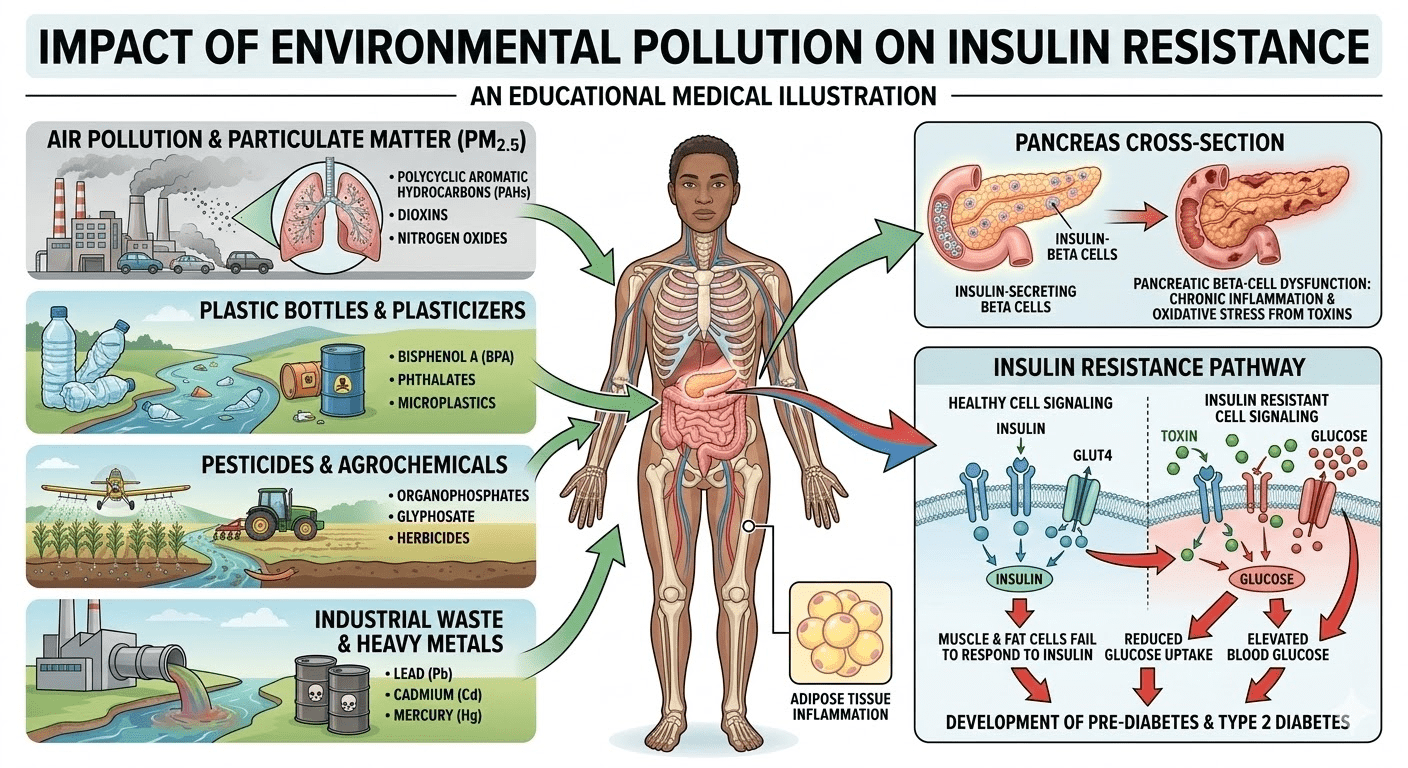
Modern lifestyles expose us to hundreds of chemicals every day. From polluted air to plastic packaging, these substances may silently impact our health. One growing concern among researchers is the connection between Environmental Toxins and Insulin Resistance, a major risk factor for type 2 diabetes and metabolic syndrome.
In India, rising pollution levels, pesticide use in agriculture, and increased plastic consumption make this topic especially important. Understanding how Environmental Toxins and Insulin Resistance are linked can help you make smarter lifestyle choices and protect your long-term health.
External Reference: World Health Organization report on environmental health risks
https://www.who.int/news-room/fact-sheets/detail/chemical-safety
What is Insulin Resistance?
Insulin resistance occurs when the body’s cells stop responding effectively to insulin. Insulin is a hormone produced by the pancreas that helps glucose enter cells to produce energy.
When cells become resistant to insulin:
- Blood sugar levels increase
- The pancreas produces more insulin
- Fat storage increases
- Risk of diabetes rises
Over time, insulin resistance can lead to Type 2 diabetes, obesity, PCOS, and heart disease.
While diet and lifestyle are well-known causes, researchers are now discovering that Environmental Toxins and Insulin Resistance are also strongly connected.
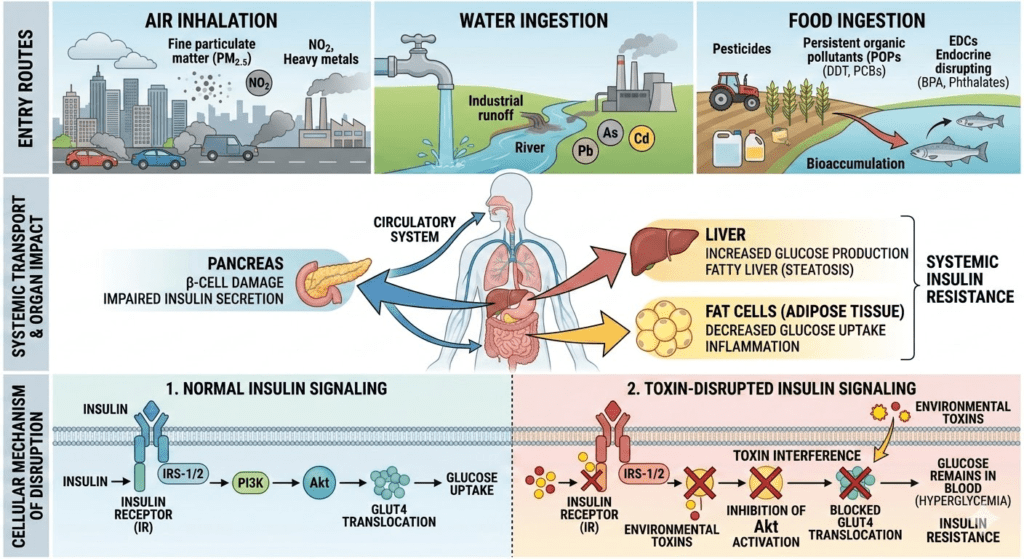
How Environmental Toxins Affect Metabolism
Environmental toxins are harmful chemicals present in air, water, food, and household products. Many of these chemicals act as endocrine disruptors, meaning they interfere with hormones.
These toxins can:
- Damage pancreatic cells
- Disrupt insulin signaling
- Increase inflammation
- Promote fat storage
- Alter gut microbiome
Because of these effects, Environmental Toxins and Insulin Resistance are increasingly being studied in metabolic disease research.
External Reference: National Institute of Environmental Health Sciences
https://www.niehs.nih.gov/health/topics/agents/endocrine
Major Environmental Toxins Linked to Insulin Resistance
1. BPA (Bisphenol A)
BPA is commonly found in:
- Plastic bottles
- Food containers
- Thermal receipts
Research suggests BPA can interfere with insulin receptors and promote fat accumulation.
This makes Environmental Toxins and Insulin Resistance a serious concern in everyday plastic use.
2. Pesticides
Agricultural pesticides are widely used in farming across India.
Common exposure sources include:
- Fruits and vegetables
- Contaminated water
- Air pollution in farming areas
Studies show certain pesticides can disrupt glucose metabolism and increase diabetes risk.
3. Air Pollution
Air pollution is one of the most overlooked contributors to Environmental Toxins and Insulin Resistance.
Pollution particles can:
- Trigger chronic inflammation
- Damage mitochondria
- Disrupt glucose metabolism
A study published in The Lancet Planetary Health linked air pollution exposure to higher diabetes risk.
4. Heavy Metals
Heavy metals such as:
- Arsenic
- Mercury
- Cadmium
- Lead
are found in contaminated water, industrial emissions, and some seafood.
These metals interfere with pancreatic function and insulin activity.
Signs That Environmental Toxins May Be Affecting Your Metabolism
Although toxin exposure is often silent, certain symptoms may signal metabolic disruption.
Possible signs include:
- Persistent fatigue
- Weight gain around the abdomen
- Sugar cravings
- Brain fog
- Hormonal imbalance
- Prediabetes or high insulin levels
If multiple symptoms appear, Environmental Toxins and Insulin Resistance may be contributing factors.
How Environmental Toxins Increase Diabetes Risk
Research increasingly confirms that Environmental Toxins and Insulin Resistance play a role in the global diabetes epidemic.
Toxins may contribute to diabetes by:
- Damaging insulin-producing cells
- Increasing oxidative stress
- Disrupting hormone balance
- Causing chronic inflammation
- Altering gut microbiota
These mechanisms gradually lead to reduced insulin sensitivity and metabolic dysfunction.

Practical Ways to Reduce Toxin Exposure
Reducing toxin exposure can help lower the risk of Environmental Toxins and Insulin Resistance.
Choose Safer Food Options
- Wash fruits and vegetables thoroughly
- Prefer organic produce when possible
- Avoid heavily processed packaged foods
Reduce Plastic Usage
- Use glass or steel containers
- Avoid microwaving food in plastic
- Use BPA-free bottles
Improve Indoor Air Quality
- Ventilate your home daily
- Use indoor plants
- Consider air purifiers in polluted cities
Filter Drinking Water
Heavy metals and chemicals may contaminate water. Use high-quality filters such as RO or activated carbon filters.
Lifestyle Habits That Improve Insulin Sensitivity
While reducing toxins is important, lifestyle also plays a key role.
Healthy habits include:
- Regular exercise (30 minutes daily)
- High-fiber diet
- Adequate sleep
- Stress management
- Limiting refined sugar
Combining these habits with reduced toxin exposure can significantly improve metabolic health.
The connection between Environmental Toxins and Insulin Resistance is gaining attention worldwide. Chemicals found in plastics, pesticides, air pollution, and contaminated water may silently disrupt metabolism and increase diabetes risk.
For countries like India, where environmental exposure is increasing, awareness is essential. By reducing contact with harmful chemicals, choosing healthier foods, and adopting better lifestyle habits, individuals can protect themselves from the long-term effects of Environmental Toxins and Insulin Resistance.
Small daily choices today can lead to a healthier metabolic future.
Also Read: Phone Addiction: 9 Powerful and Alarming Effects on Your Brain You Must Know
FAQs
1. What are environmental toxins?
Environmental toxins are harmful chemicals found in air, water, food, and household products that can negatively affect human health.
2. Can environmental toxins cause insulin resistance?
Yes. Many toxins act as endocrine disruptors that interfere with hormone signaling and glucose metabolism, contributing to insulin resistance.
3. Which toxins are most linked to diabetes risk?
Common toxins include BPA, pesticides, air pollution particles, and heavy metals like arsenic and mercury.
4. How can I reduce exposure to environmental toxins?
Use glass containers instead of plastic, wash produce well, drink filtered water, and avoid highly processed foods.
5. Is toxin exposure a major cause of diabetes?
Toxins alone are not the only cause, but they can significantly increase risk when combined with poor diet, lack of exercise, and genetic factors.