

The concept of Autoimmune Health Basics is becoming increasingly important as autoimmune diseases are rising worldwide, including in India. An autoimmune condition occurs when the immune system mistakenly attacks healthy cells in the body instead of protecting them from infections.
Understanding Autoimmune Health Basics helps individuals recognize early symptoms, adopt healthier lifestyles, and support their immune system naturally. In this guide, we’ll explore how autoimmune diseases work, common symptoms, causes, diet tips, and prevention strategies.
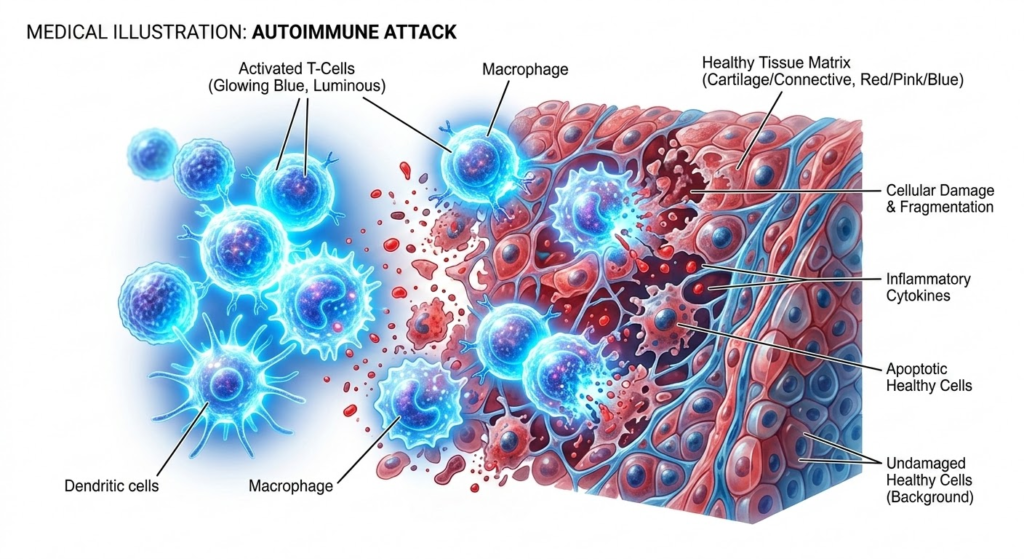
What Are Autoimmune Diseases? (Autoimmune Health Basics Explained)
Autoimmune diseases occur when the immune system becomes confused and begins attacking the body’s own tissues. Normally, the immune system protects against bacteria, viruses, and harmful pathogens.
However, in autoimmune conditions, the body cannot distinguish between self cells and foreign invaders.
More than 80 autoimmune diseases have been identified. Some of the most common include:
- Rheumatoid arthritis
- Type 1 diabetes
- Lupus
- Multiple sclerosis
- Psoriasis
- Thyroid disorders like Hashimoto’s disease
According to the National Institutes of Health (NIH), autoimmune diseases affect millions of people worldwide.
For more medical insights, you can visit:
https://www.niams.nih.gov/health-topics/autoimmune-diseases
Common Symptoms of Autoimmune Diseases
Symptoms vary depending on the type of autoimmune disorder, but several warning signs are commonly seen.
Key Symptoms to Watch
- Chronic fatigue
- Joint pain or swelling
- Skin rashes
- Digestive problems
- Fever
- Hair loss
- Brain fog or difficulty concentrating
Many people initially ignore these symptoms, assuming they are due to stress or lifestyle issues.
Early diagnosis can significantly improve treatment outcomes.
Major Causes of Autoimmune Disorders
The exact cause of autoimmune diseases is still being researched. However, several factors are known to increase risk.
1. Genetic Factors
Family history plays a strong role. If autoimmune diseases run in your family, your risk may be higher.
2. Environmental Triggers
External triggers can activate autoimmune responses, such as:
- Viral infections
- Exposure to toxins
- Pollution
- Smoking
3. Hormonal Changes
Women are more likely to develop autoimmune diseases than men, possibly due to hormonal influences.
4. Gut Health Imbalance
Many experts believe poor gut health and inflammation can contribute to autoimmune reactions.
Learn more about immune health research:
https://www.health.harvard.edu/immune-system
How the Immune System Attacks the Body
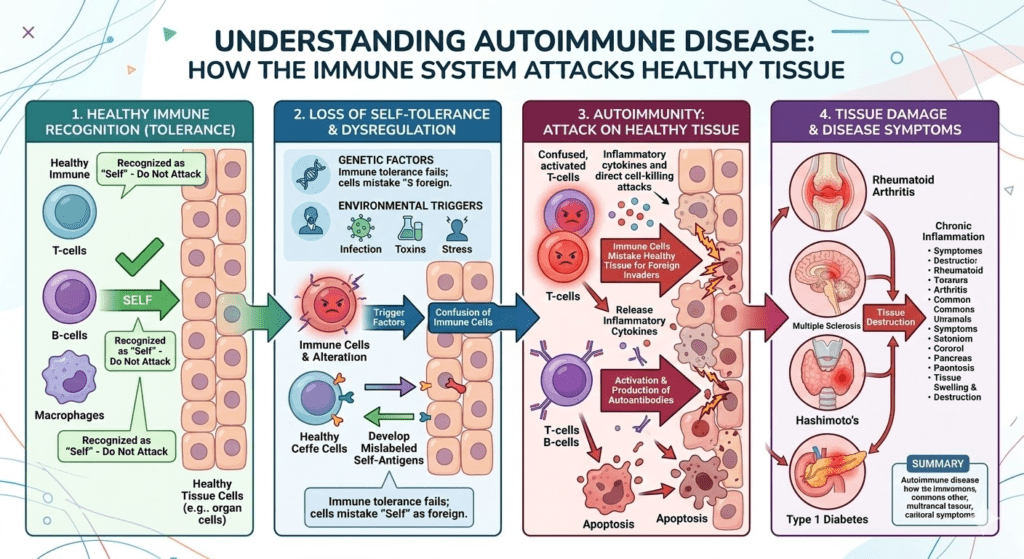
In autoimmune diseases, the immune system produces autoantibodies that target healthy cells.
This results in chronic inflammation and tissue damage.
The process usually follows these steps:
- Immune system misidentifies healthy cells
- Antibodies attack body tissues
- Inflammation develops
- Long-term organ damage may occur
Understanding this mechanism is essential when learning Autoimmune Health Basics.
The Role of Diet in Autoimmune Health Basics
Diet plays a powerful role in controlling inflammation and supporting immune balance.
Certain foods can trigger inflammation, while others help calm the immune system.
Anti-Inflammatory Foods to Include
- Leafy greens (spinach, kale)
- Turmeric and ginger
- Fatty fish like salmon
- Nuts and seeds
- Fresh fruits
- Olive oil
Foods to Limit
- Processed foods
- Refined sugar
- Excess dairy
- Fried foods
- Artificial additives
Many people follow an Autoimmune Protocol (AIP) diet, which focuses on removing inflammatory foods and gradually reintroducing them.
Lifestyle Habits That Support Immune Balance
Along with diet, lifestyle habits play a major role in managing autoimmune health.
Important Lifestyle Changes
1. Regular Exercise
Moderate physical activity reduces inflammation and improves immunity.
2. Stress Management
Chronic stress weakens immune regulation. Practices like:
- Yoga
- Meditation
- Deep breathing
can help restore balance.
3. Quality Sleep
Poor sleep increases inflammatory markers. Aim for 7–8 hours of sleep daily.
4. Sunlight and Vitamin D
Vitamin D supports immune function and may reduce autoimmune risk.
Can Autoimmune Diseases Be Prevented?
While not all autoimmune diseases can be prevented, several strategies can reduce the risk.
Prevention Tips
- Maintain a balanced diet
- Reduce exposure to environmental toxins
- Manage stress effectively
- Exercise regularly
- Avoid smoking and excessive alcohol
Regular health checkups also help detect early signs of autoimmune disorders.
When Should You See a Doctor?
You should consult a doctor if you experience persistent symptoms such as:
- Severe fatigue
- Chronic joint pain
- Unexplained rashes
- Recurrent infections
Doctors usually diagnose autoimmune diseases using:
- Blood tests
- Antibody tests
- Imaging scans
Early treatment can significantly improve quality of life.
Understanding Autoimmune Health Basics is the first step toward protecting your immune system and overall health. Autoimmune diseases occur when the body mistakenly attacks its own cells, leading to chronic inflammation and tissue damage.
By recognizing symptoms early, following an anti-inflammatory diet, managing stress, and maintaining healthy lifestyle habits, individuals can support immune balance and reduce complications.
Awareness, prevention, and early medical care remain the most effective strategies for managing autoimmune health.
Also Read: Pigmentation Hormonal or Sun Damage: 7 Powerful Ways to Identify & Treat It Naturally
FAQs
1. What is the main cause of autoimmune diseases?
Autoimmune diseases are caused by a combination of genetic, environmental, and lifestyle factors that trigger the immune system to attack healthy cells.
2. What are the most common autoimmune diseases?
Some common autoimmune diseases include rheumatoid arthritis, lupus, type 1 diabetes, psoriasis, and multiple sclerosis.
3. Can diet improve autoimmune conditions?
Yes. Anti-inflammatory diets rich in vegetables, healthy fats, and whole foods may help reduce inflammation and improve symptoms.
4. Are autoimmune diseases curable?
Most autoimmune diseases cannot be completely cured, but they can be managed with medications, diet, and lifestyle changes.
5. Who is more likely to develop autoimmune diseases?
Women are generally more likely to develop autoimmune diseases than men, and genetics also play a significant role.