
Skin pigmentation is a very common concern among people in India due to intense sun exposure, hormonal changes, pollution, and lifestyle factors. Many people notice dark patches on the face and immediately assume they are caused by the sun. However, the real reason could also be hormonal imbalance.
Understanding Pigmentation Hormonal or Sun Damage is essential because the treatment approach differs for both conditions. Treating hormonal pigmentation like sunspots may not give results, while ignoring sun protection can worsen pigmentation caused by UV rays.
In this guide, you will learn how to identify whether your pigmentation is hormonal or sun-related and the best ways to treat and prevent it.
What Is Pigmentation?
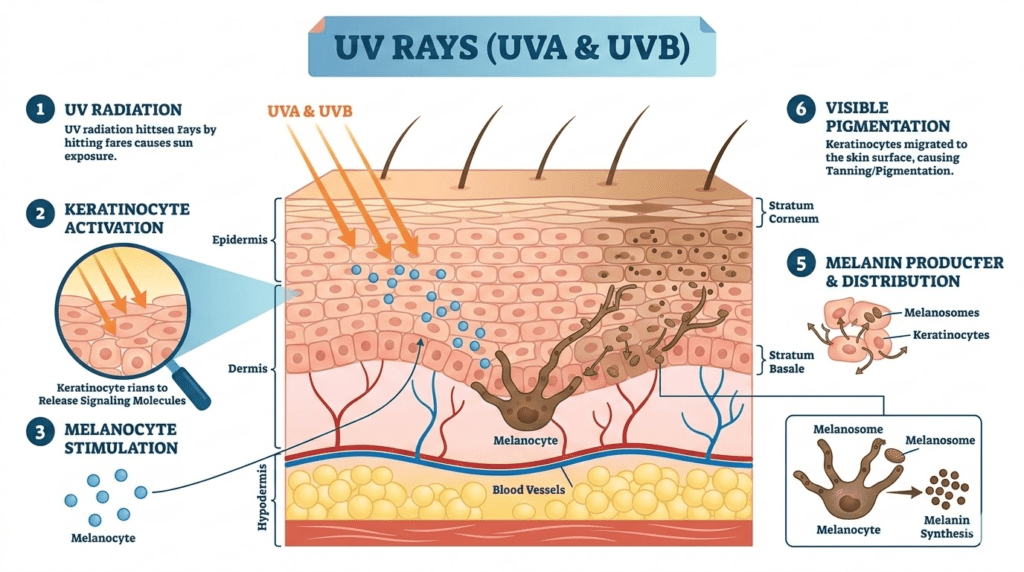
Pigmentation refers to the darkening of certain areas of the skin due to excess production of melanin. Melanin is the pigment responsible for giving color to our skin, hair, and eyes.
When melanin production increases due to internal or external factors, dark patches appear on the skin. These patches may appear on:
- Face
- Forehead
- Cheeks
- Upper lip
- Nose
- Neck
In India, pigmentation is extremely common because of high UV exposure and changing hormonal patterns.
According to dermatology research published by the American Academy of Dermatology
https://www.aad.org/public/diseases/a-z/hyperpigmentation-overview, pigmentation can occur due to sun damage, hormonal imbalance, inflammation, or skin injuries.
Understanding Pigmentation Hormonal or Sun Damage helps in choosing the right treatment strategy.
Pigmentation Hormonal or Sun Damage: Key Differences
Many people struggle to identify whether their pigmentation is hormonal or caused by sun exposure. However, there are some visible signs that can help.
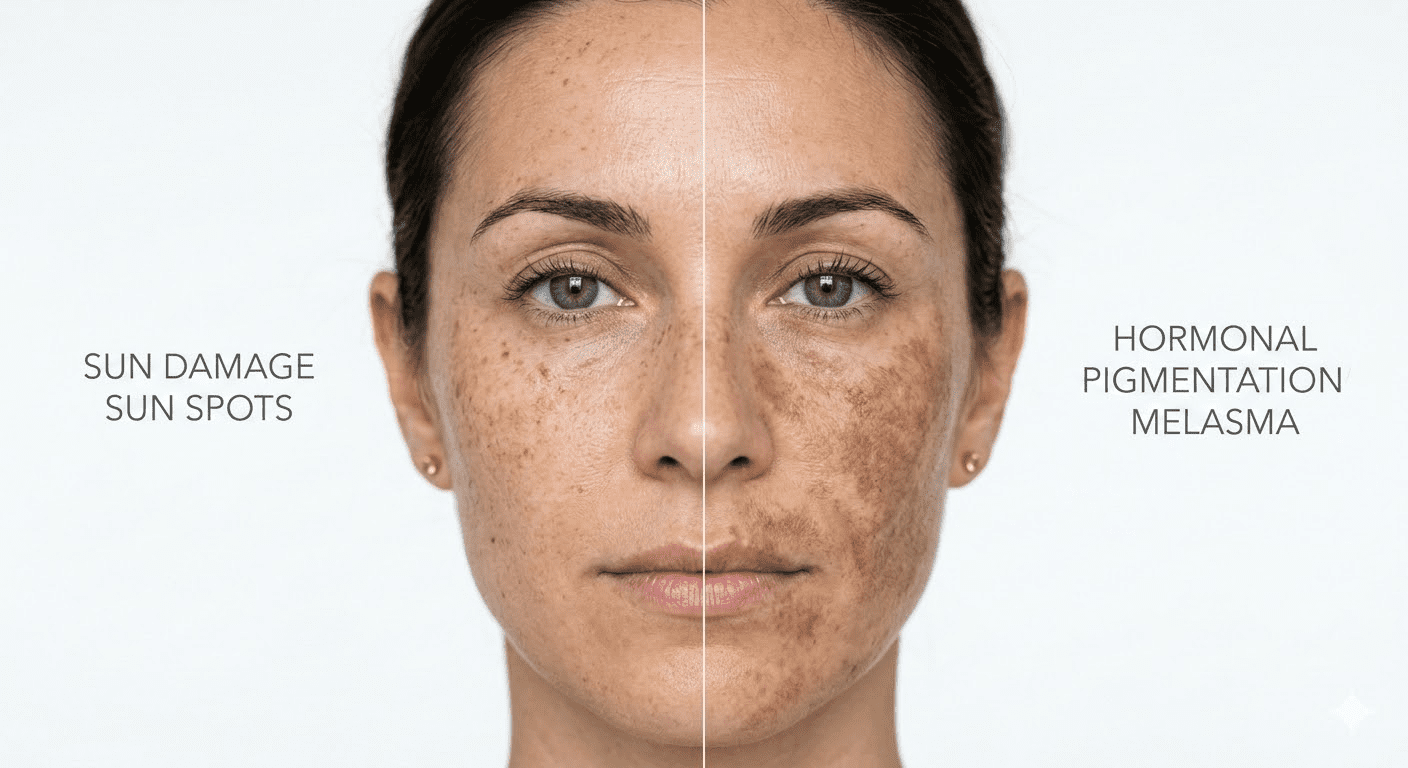
1. Hormonal Pigmentation (Melasma)
Hormonal pigmentation is also known as melasma and is often triggered by hormonal fluctuations.
Common causes include:
- Pregnancy
- Birth control pills
- Hormonal imbalance
- Thyroid issues
- PCOS
Features of hormonal pigmentation:
- Symmetrical patches on both sides of the face
- Brown or grayish patches
- Appears mostly on cheeks, forehead, and upper lip
- Darkens with sun exposure
Dermatologists explain melasma in detail here:
https://www.ncbi.nlm.nih.gov/books/NBK459271/
2. Sun Damage Pigmentation (Sunspots)
Sunspots occur due to prolonged exposure to ultraviolet (UV) radiation.
Common triggers:
- Excess sunlight
- Outdoor activities without sunscreen
- Tanning
- Aging skin
Features of sun damage pigmentation:
- Random spots instead of symmetrical patches
- Usually appears on nose, cheeks, and forehead
- Dark brown or black spots
- More common after age 30
Understanding Pigmentation Hormonal or Sun Damage helps determine whether sunscreen alone is enough or medical treatment is required.
Causes of Pigmentation Hormonal or Sun Damage
1. Hormonal Changes
Hormonal fluctuations can trigger melanin production.
This commonly happens during:
- Pregnancy
- Menopause
- PCOS
- Hormonal medications
These changes stimulate melanocytes, leading to hormonal pigmentation.
2. Sun Exposure
India receives strong UV radiation throughout the year. Without proper sun protection, the skin produces more melanin as a defense mechanism.
Over time, this leads to:
- Sunspots
- Freckles
- Uneven skin tone
The World Health Organization also highlights how UV radiation contributes to skin damage:
https://www.who.int/news-room/questions-and-answers/item/radiation-ultraviolet-(uv)
3. Genetics
Some individuals are genetically more prone to pigmentation.
People with medium to darker skin tones (common in India) produce more melanin, which increases the chances of pigmentation.
How to Identify Pigmentation Hormonal or Sun Damage
Dermatologists usually diagnose pigmentation based on pattern, location, and triggers.
Signs of Hormonal Pigmentation
- Symmetrical patches on cheeks
- Appears during pregnancy or hormonal treatment
- Dark patches worsen in sunlight
- Usually resistant to normal creams
Signs of Sun Damage
- Small scattered dark spots
- Appears on exposed areas
- Improves with sunscreen and brightening creams
- Usually increases with age
Sometimes dermatologists use a Wood’s Lamp examination to determine pigmentation depth.
Best Treatments for Pigmentation Hormonal or Sun Damage
Treatment depends on the underlying cause.
1. Sunscreen (Most Important)
Daily sunscreen is essential for both hormonal and sun pigmentation.
Choose:
- SPF 50+
- Broad spectrum protection
- PA+++ or higher
Without sunscreen, pigmentation treatments will not work effectively.
2. Topical Treatments
Dermatologists often prescribe creams containing:
- Vitamin C
- Kojic acid
- Azelaic acid
- Niacinamide
- Retinoids
These ingredients reduce melanin production and lighten dark spots.
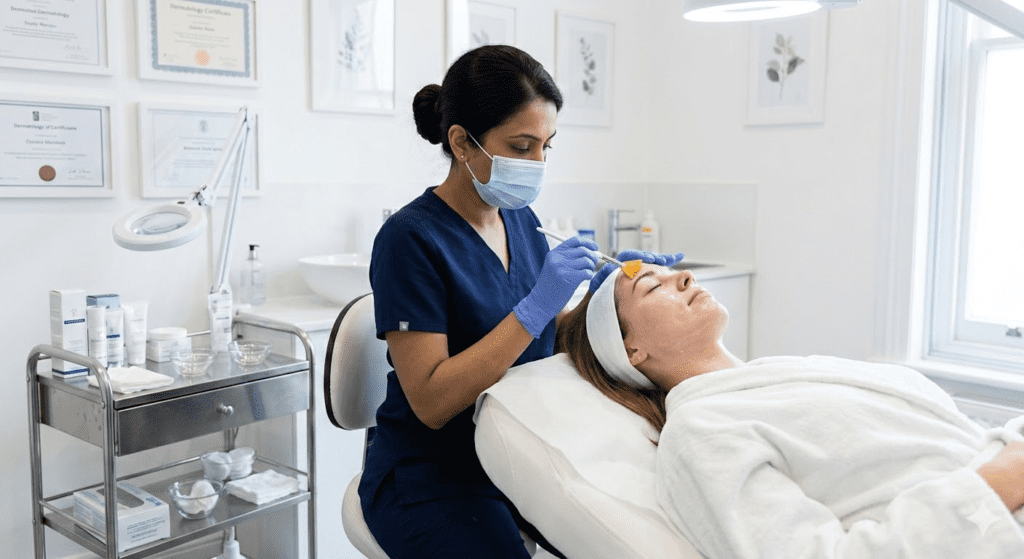
3. Chemical Peels
Chemical peels help exfoliate the skin and remove pigmentation gradually.
Common peels include:
- Glycolic acid peel
- Lactic acid peel
- Salicylic acid peel
These should be performed by certified dermatologists.
4. Laser Treatments
Advanced laser treatments target melanin directly.
Popular options include:
- Q-switched laser
- Pico laser
- Fractional laser
These treatments work best for stubborn pigmentation.
5. Lifestyle Changes
Simple lifestyle adjustments can prevent worsening pigmentation.
Helpful habits include:
- Wearing hats and sunglasses outdoors
- Avoiding harsh skincare products
- Eating antioxidant-rich foods
- Managing hormonal health
Foods rich in Vitamin C and antioxidants support healthy skin and reduce pigmentation.
Prevention Tips for Pigmentation
Preventing pigmentation is easier than treating it.
Follow these tips:
- Apply sunscreen every 3 hours outdoors
- Avoid peak sun hours (12–3 PM)
- Use gentle skincare products
- Maintain hormonal balance
- Follow a dermatologist-recommended skincare routine
These steps significantly reduce the chances of developing Pigmentation Hormonal or Sun Damage.
Pigmentation can affect anyone, but identifying whether it is Pigmentation Hormonal or Sun Damage is the key to effective treatment. Hormonal pigmentation often appears as symmetrical patches and may require medical treatment, while sun damage usually appears as scattered spots due to UV exposure.
Using sunscreen daily, maintaining a proper skincare routine, and consulting a dermatologist when necessary can help manage pigmentation effectively.
With the right approach and consistent care, clearer and healthier skin is absolutely achievable.
Also Read: Autoimmune Health Basics: 10 Powerful Facts Everyone Should Know for Better Immunity
FAQs
1. How do I know if my pigmentation is hormonal or sun damage?
Hormonal pigmentation usually appears as symmetrical patches on cheeks and forehead, while sun damage appears as scattered dark spots on sun-exposed areas.
2. Can sunscreen remove pigmentation?
Sunscreen cannot remove pigmentation but prevents it from worsening and supports other treatments.
3. Is hormonal pigmentation permanent?
Hormonal pigmentation like melasma can be controlled with treatment but may recur if triggers remain.
4. Which ingredient is best for pigmentation?
Ingredients like Vitamin C, Kojic acid, Niacinamide, and Azelaic acid are commonly recommended by dermatologists.
5. Can pigmentation disappear naturally?
Mild sunspots may fade over time with proper sun protection, but hormonal pigmentation usually requires treatment.